Pseudo errors in production - unavoidable?
Scalable quality control with AI
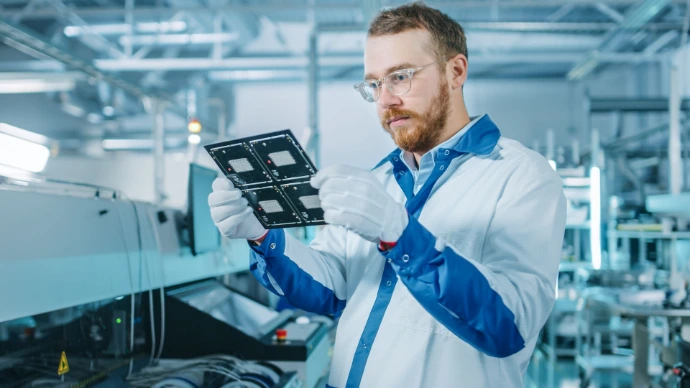
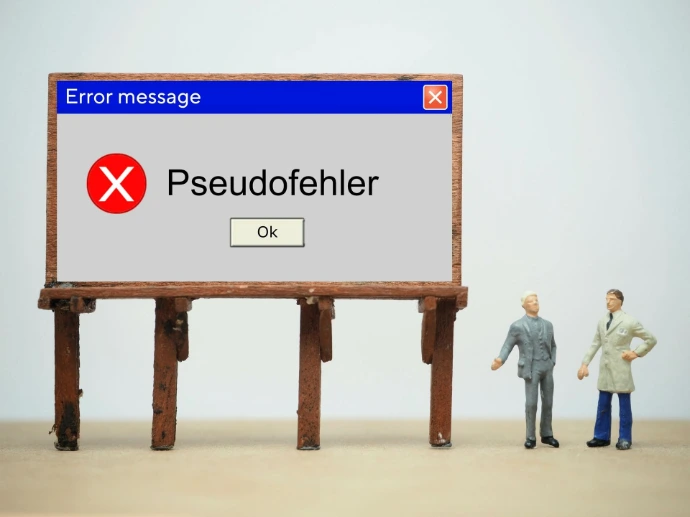
If a component has been manufactured successfully and correctly but is subsequently identified as defective during quality inspection and rejected, this is referred to as a pseudo error — a defect that isn’t really a defect at all. Pseudo errors lead to unnecessary scrap and rework, thereby reducing efficiency. Learn here how pseudo errors arise and how they can be avoided.
Quality control
In a 100% perfect production process, every error-free component would look exactly the same. Unfortunately, the real world is different. Manufacturing processes such as soldering, welding, bonding, etc., cannot be carried out without natural—albeit minor—imprecisions and variations in the final result. This means that in virtually every production run, there are deviations from the “ideal component.” It is the task of quality control to verify whether these deviations are within acceptable limits or whether the component deviates too far from the ideal and is defective. This inspection can yield 4 results.
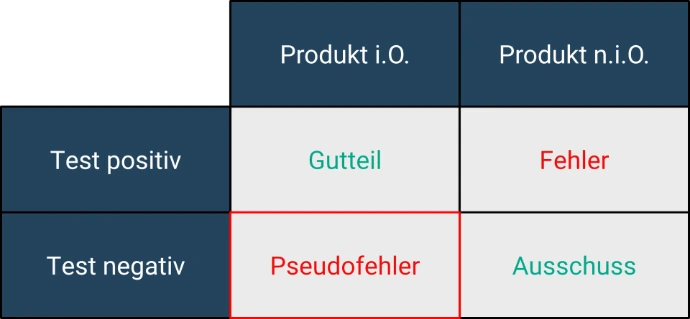
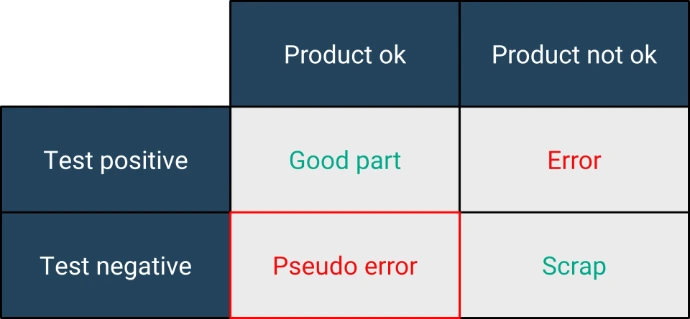
If the inspected component is in good condition (OK) and quality control deems it acceptable, then everything went according to plan and the component is considered good. If the component is defective and is deemed defective, a defect was correctly identified and the component is considered scrap. If, on the other hand, the component is defective but is assessed as good by quality control, a classic error has occurred. Perhaps a quality control device is faulty or set too leniently, or an inspector simply missed a defect. A pseudo error occurs when a component that is actually in good condition is detected as defective.
So pseudo errors occur when a component falls within the acceptable variance of the manufacturing process, but quality control deems this variance as excessive. So it turns out pseudo errors are a problem in quality control.
For example, a solder joint with excess solder may be identified as defective even though it does not affect the circuit board’s functionality at all, or discoloration or dirt that is irrelevant to the component may be classified as affecting functionality.
What causes pseudo errors?
In traditional visual inspection, humans examine the components being inspected. Fatigue or distractions can lead to both errors and pseudo errors. In other production settings, automatic optical inspection (AOI) is used. These are automated systems that use cameras to inspect components and compare them “pixel by pixel” with an ideal image. Here, incorrectly set similarity thresholds can lead to errors and false positives. If the thresholds are set too “loose,” errors occur; if, on the other hand, the thresholds are set too “strict,” pseudo errors occur.
In addition, AOI faces challenges related to variations in the production environment. Changes in lighting conditions or camera angles, which humans can easily recognize as irrelevant, cause the component under inspection to appear completely different at the pixel level. The AOI system detects a significant deviation where none actually exists, resulting in a pseudo error.
What is the solution?
These issues can be significantly reduced through AI integration. Artificial intelligence not only inspects components at the pixel level but also learns the exact characteristics of the component being inspected. This makes it significantly more resilient to changing environmental conditions. Thus, AI-supported AOI combines the advantages of both quality inspection systems. It can operate with the precision and consistency of a machine, yet—provided it has good training data—assess the quality of the component as flexibly as a human. This efficiently and sustainably prevents pseudo errors.
Author: Thomas Möller