Visual inspection in production - saving costs and finding efficiencies
Sichtkontrolle in der Produktion - Kosten sparen und Effizienzen finden
In modern manufacturing, both quality requirements and the pressure to reduce production costs in the long term are increasing. In industries such as electronics, automotive and medical technology in particular, reliable quality control is crucial to competitiveness and customer satisfaction. Traditional visual inspection is often a problem area in production.
When visual inspection reaches its limits
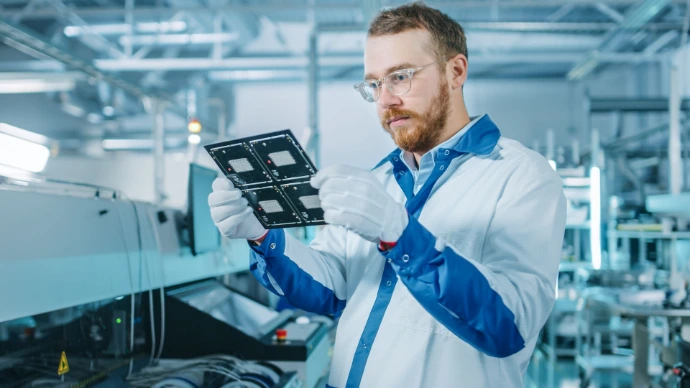
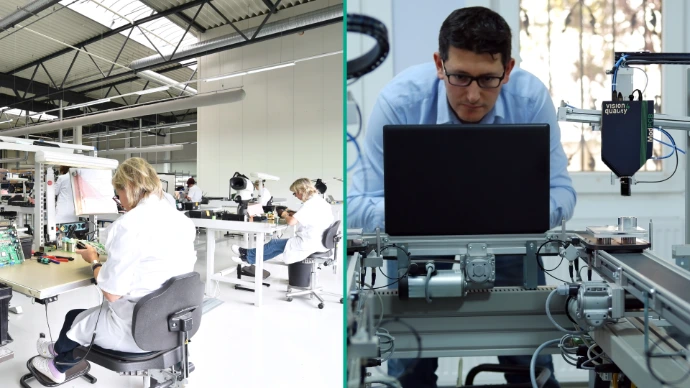
Manual visual inspection is a very time-consuming, expensive and difficult to scale method of component testing.
The inspection of components and assemblies by human visual inspection is a standard process in many companies. Employees or external service providers are tasked with visually inspecting each individual unit to ensure that it meets quality requirements. However, this approach presents several challenges:
1. High ongoing personnel costs: Qualified personnel must be paid, trained and coordinated. This expense is multiplied in shift operations.
2. Subjectivity and fatigue: Even well-trained employees cannot maintain the same level of precision over long periods of time. Fatigue leads to errors or inconsistent assessments.
3. Scaling problems: As quantities increase, so does the need for inspection personnel, an expensive and difficult-to-scale factor in production.
4. Documentation and traceability: Digital recording of each inspection is time-consuming and often incomplete when performed manually.
In short: with increasing quantities and quality standards, manual visual inspection no longer meets the requirements of digitised, efficient production.
AOI – the smart alternative in quality inspection
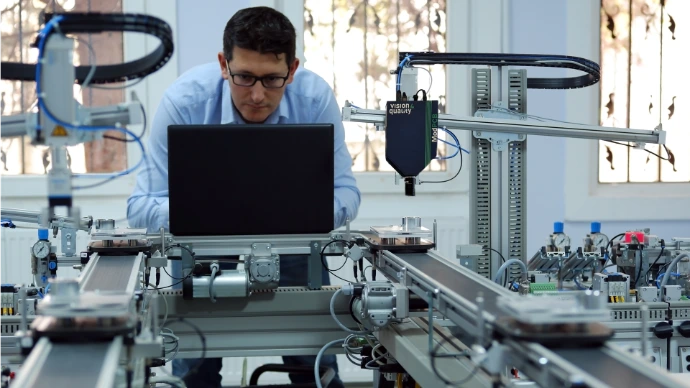
AOI can provide a solution when quantities and quality requirements increase.
Automatic optical inspection, or AOI for short, describes systems that use industrial image processing to evaluate camera data and reliably detect errors in production. These systems operate continuously and objectively, digitally documenting each inspected work step, which represents a decisive advantage over manual inspection.
Find out more here!
The key advantages of AOI
1. Objective and reproducible results
AOI systems use precise image processing and can detect defects that may escape the human eye. The evaluation is consistent regardless of the time of day or fatigue.
2. 100% instead of random sampling
While human visual inspection often only allows random sampling, AOI can subject every single component to a 100 per cent inspection. This means that faulty parts are detected early on and excluded from production.
3. Constant digital documentation
AOI solutions automatically store test results, creating transparency, traceability and a solid basis for process optimisation.
4. Efficiency and cost savings
Although the introduction of an AOI system requires an investment, this often pays for itself quickly through lower personnel costs, less waste and more stable production quality.
5. Automation
AOI solutions can be automated across the entire production process. For example, thresholds for missing parts can be set so that if these are exceeded, a batch can be rejected or production can be halted.
Practical application in manufacturing
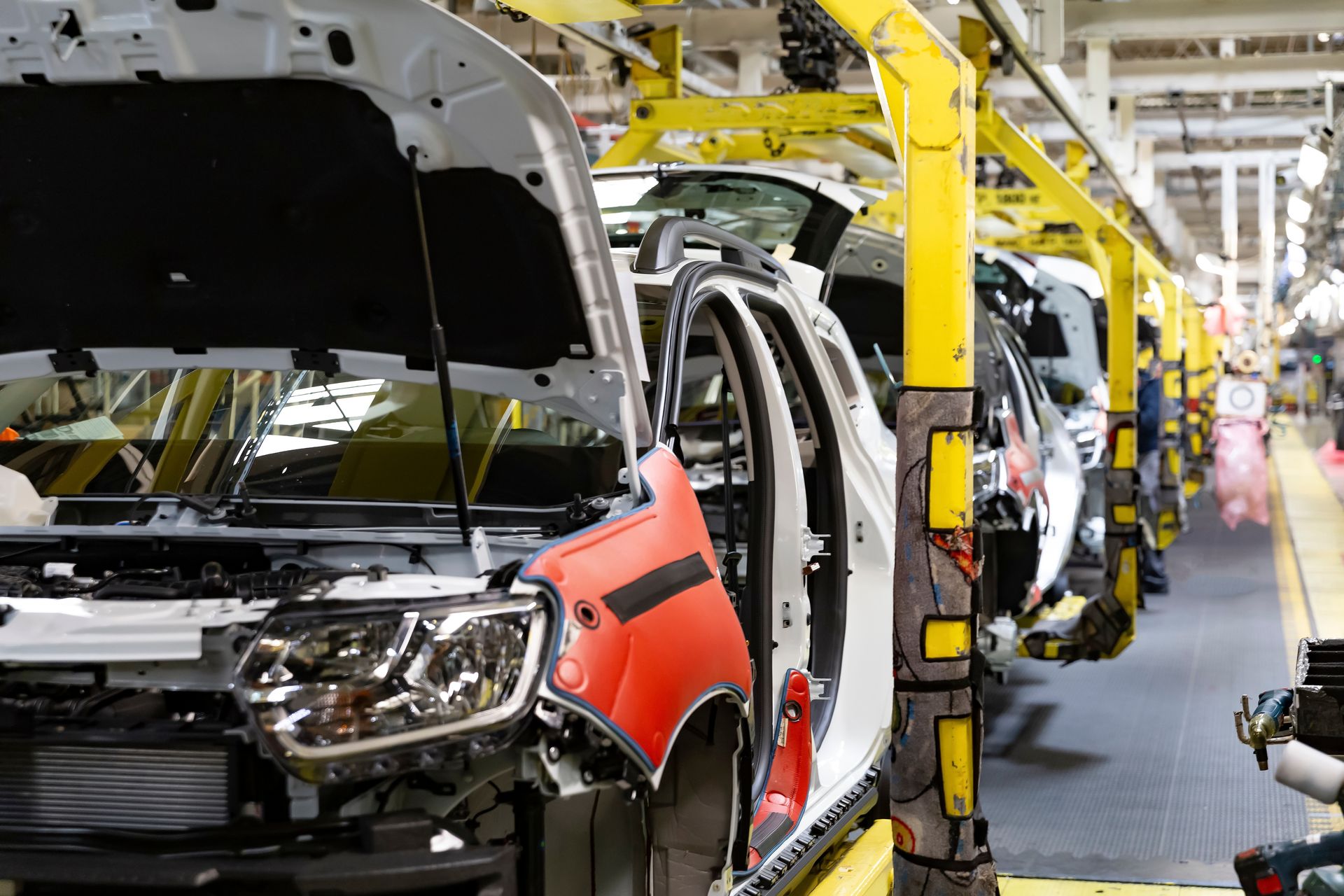
AOI is used in everything from PCB assembly to automotive assembly.
AOI systems are already being used successfully in a wide range of industries, from electronics to automotive. They check solder joints, component positions, surface defects and assembly irregularities, and can be flexibly integrated into existing production lines. The benefits are particularly evident in areas with high volumes or very strict quality requirements: production processes become not only safer, but also more predictable and efficient.
A special case of AOI is also frequently used here: combination with worker guidance or worker assistance systems. These are not only used for final checks and visual inspection, but also guide assembly and placement, checking the correct execution of each individual work step in real time. Errors can thus be corrected immediately as they occur.
Find out more here!
Another advantage of modern systems is their combination with artificial intelligence (AI), which delivers robust results even in changing lighting conditions or with varying component shapes. This also allows pseudo errors, which AOI systems often struggle with, to be completely avoided.
AOI as a contribution to digital transformation with AI
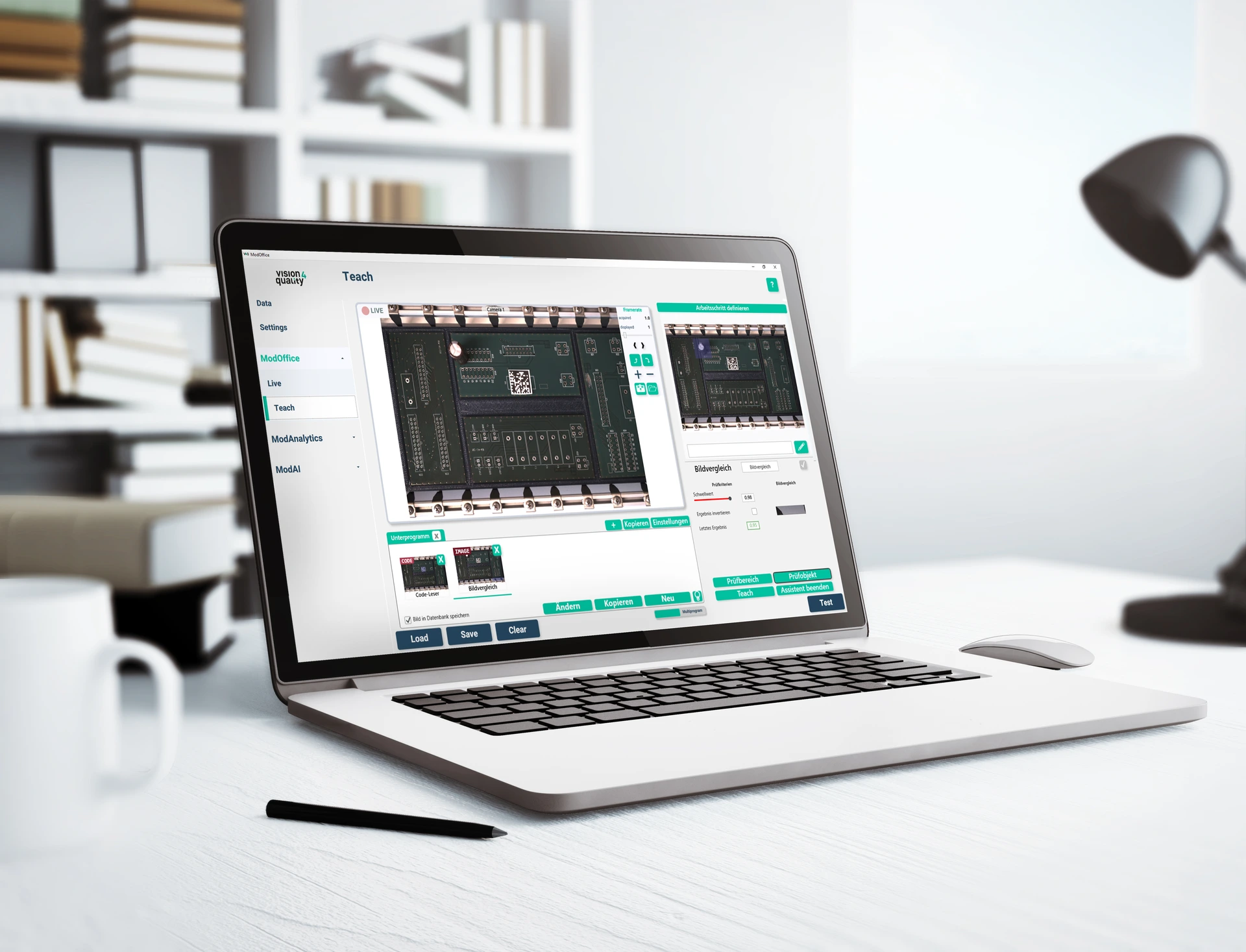
AOI programmes can be created and managed using modern office software.
Automatic optical inspection is a valuable upgrade for smart production. Digitised inspection processes not only detect defects, but also collect and evaluate valuable data that can be used for continuous improvement. This means that quality is not only checked, but guaranteed.
AOI is a strategically sound investment, particularly for companies looking to modernise their production processes while reducing costs – not only in the short term, but also in the long term when it comes to standardisation, scalability and competitiveness.
Once again, systems with AI integration are particularly smart. Such AOI solutions can learn from sample data and thus automate even complex inspection tasks without having to manually programme each individual case.
In unserer Videoreihe präsentieren wir anhand der Montage eines Desktop-PC, wie KI-gestützte AOI Produktion effizient und skalierbar macht. Jetzt KI selbst erstellen !
In our video series, we assemble a desktop computer to present how AI-supported AOI can make your production more efficient and scalable. Start creating your own AI now!
Conclusion: Efficiency, quality, future
Traditional manual visual inspection has served industrial manufacturing well for a long time. However, in view of increasing demands for precision, efficiency and scalability, it is reaching its limits. Automatic optical inspection (AOI) offers a technologically mature, economically viable and future-oriented alternative that lowers production costs, reduces errors and takes your manufacturing to a new level.
If you want to find out whether AOI is suitable for your specific production, it is worth consulting an expert in industrial image processing and AI-supported inspection systems. This will enable a customised analysis of your processes to be carried out and a tailor-made solution to be designed.
Author: Thomas Möller