Check the conformal coating on printed circuit boards
The alternative to manual visual inspection
Check the conformal coating on printed circuit boards
The alternative to manual visual inspection
Printed circuit boards are at the heart of modern electronics and, as such, are coated with a special protective varnish. Especially in safety-critical applications such as automotive or medical technology, a defective coating can have serious consequences.
But it is precisely this protective layer that is difficult to test: it is transparent, thin, and requires a testing method that is reliable, reproducible, and economically scalable.
Why use circuit boards with a conformal coating?
Protective coatings are applied to assembled printed circuit boards to protect the sensitive electronics from external factors such as moisture, corrosion, and electrical leakage currents.
The challenge here is that not the entire circuit board is coated. Connector pins, test points, and certain components must be explicitly excluded from the coating. Nevertheless, errors such as overcoating or missed areas frequently occur during application. Depending on the application, these can lead to malfunctions or even safety-critical situations. Inspecting the protective coating is therefore part of the standard procedure.
Making the invisible visible
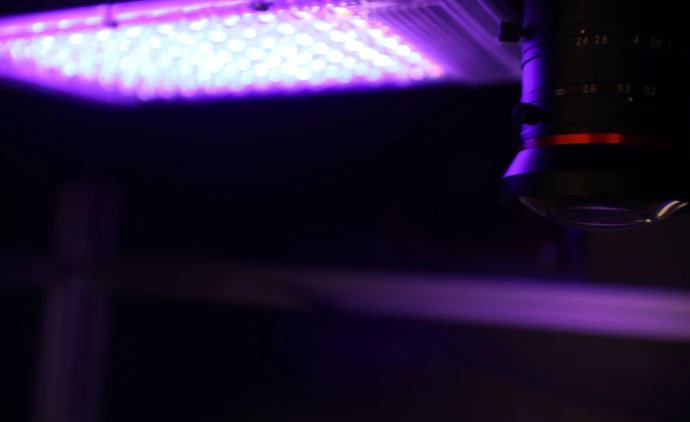
Protective coatings are transparent under normal light and almost impossible to inspect closely. The solution is UV light. Modern protective coatings contain UV-fluorescent particles that glow brightly under UV light—making the coating visible. What is barely discernible under normal light appears as a clear, high-contrast surface under UV light.
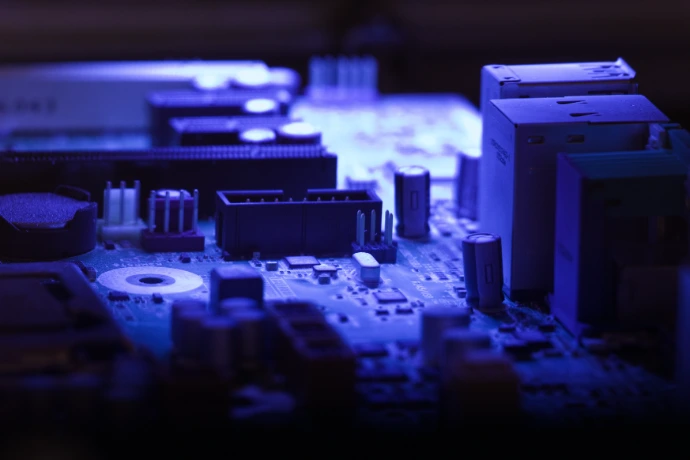
UV light allows for the inspection of conformal coatings for any defects. However, conventional testing methods still present a number of other challenges.
Current practice: Manual visual inspections are the norm—with well-known shortcomings
In many companies, manual visual inspection remains the most common method for testing protective coatings. In this process, printed circuit boards are visually inspected by trained personnel. However, this approach has several inherent drawbacks.
Judging people is always subjective. As a result, the quality of inspections is never entirely consistent but is subject to external influences. Inspections—especially complex ones, such as those involving protective coatings—take a long time and often create a bottleneck in production that limits output. Furthermore, unlike digital, automated inspections, manual visual inspections are difficult to trace.
Manual inspection generally requires a significant number of staff. Additional costs arise from the need for training, as well as the requirement to comply with safety regulations when working with UV light.¹
Inspecting electronic components: From UV coating to SMD components and solder joints
Modern solution: Camera-based AOI
Camera-based AOI (Automated Optical Inspection) systems equipped with UV lighting can use this technology to automatically verify whether the coating has been applied correctly and uniformly across the entire surface, whether the connectors and test points are free of coating residue, and whether there are any coating splatters outside the defined coating areas.
That’s the theory. However, for standard AOI systems, inspectingconformal coatings often presents an insurmountable challenge. Glossy coated surfaces cause reflections, there is usually no consistent defect pattern, and lighting conditions vary significantly depending on the PCB design. This is precisely where the next stage of development comes in.
A game-changer in conformal coating testing
Traditional image processing quickly reaches its limits when it comes to conformal coating inspection: It requires time-consuming configuration for each PCB design and is sensitive to new product variants. Above all, however, it cannot handle unknown defect patterns.
AI-based systems, on the other hand, can handle all of these issues and thus offer a genuine alternative to manual testing.
These tools allow the coated areas on the circuit board to be delineated with pixel-level precision. This means that defects can not only be detected but also precisely localized. This provides directly actionable information for rework and process optimization, and allows threshold values to be set to clearly define what is acceptable and what is not, thereby effectively eliminating false positives.
Unlike rule-based systems, which respond only to predefined error patterns, an AI model can also detect irregularities that cannot be predicted. The AI learns from its own production data and adapts to the specific conditions of the respective manufacturing environment. This increases the detection rate and makes the inspection system more robust in the long term.
What are the concrete benefits of automation?
The switch from manual to camera-based conformal coat inspection pays off in several ways:
- 100% inspection instead of spot checks: Every printed circuit board is fully inspected—reliably and without fatigue effects.
- Traceability: Test results can be statistically analyzed, enabling targeted process optimization.
- Reduction of scrap and rework: Errors are reliably detected early in the process.
- Reducing the workload on technical staff: Routine checks are automated, allowing employees to focus on error analysis and process improvement.
A real-world example
A concrete example of this approach is the AOI system ModSPOT. An axis system equipped with a high-resolution camera makes it possible to fully inspect even large-format printed circuit boards.
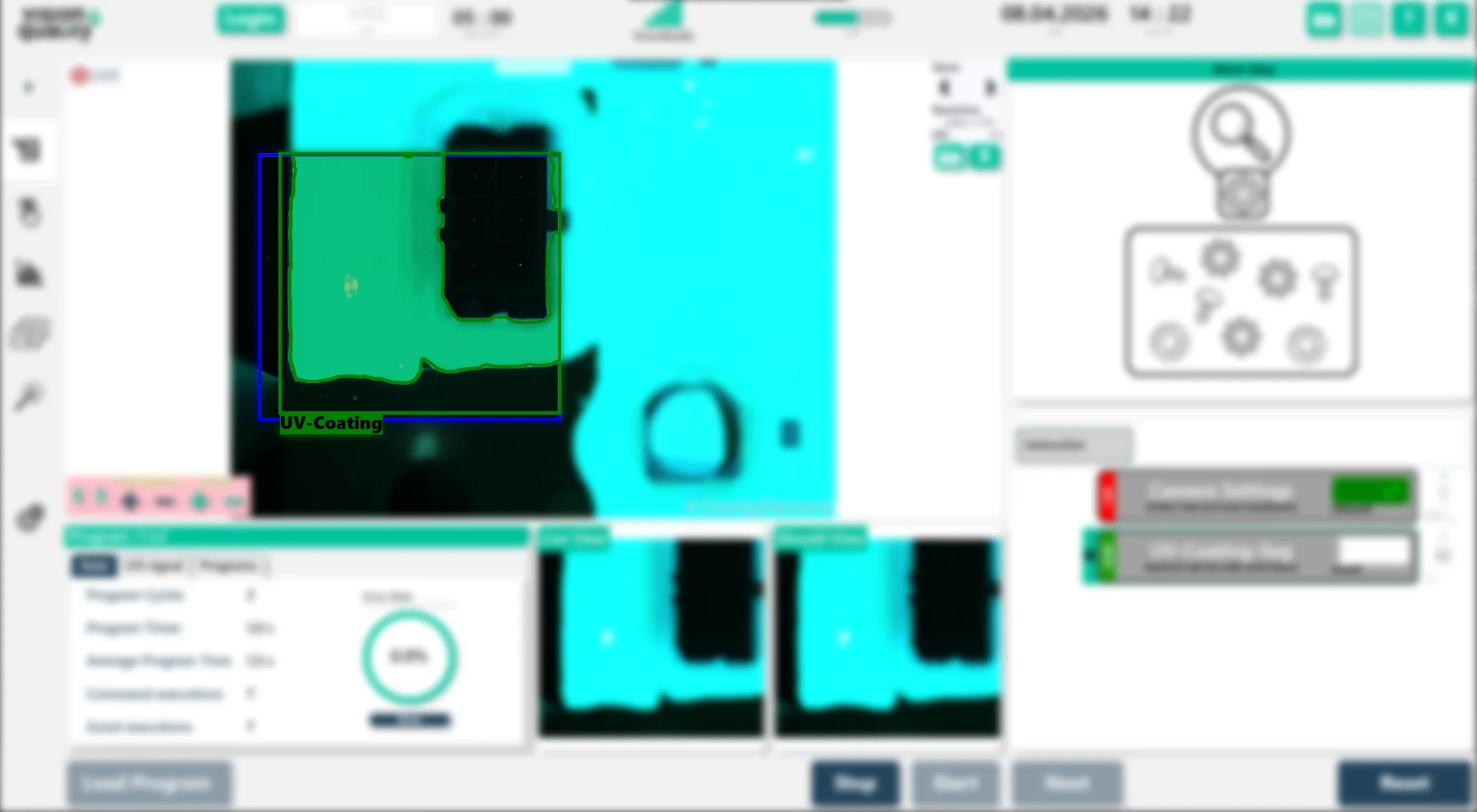
With the optional UV lighting, ModSPOT can integrate conformal coating inspections directly into the existing inspection process without requiring separate inspection stations.
The AI models for the test programs are created using the no-code software ModOFFICE erstellt. Data collection is automated during operation, and AI models can be created and refined without any programming knowledge. This enables a rapid response to new PCB variants or changes in the painting process.
Conclusion: Testing protective coatings requires more than just a UV lamp
Inspecting conformal coatings presents a challenge that should not be underestimated. A diverse range of defects and the need for specialized lighting make manual inspections time-consuming and prone to errors. Even traditional AOI systems often encounter problems in practice and generate false positives.
It requires not only appropriate lighting but also intelligent image analysis capable of handling the realities of manufacturing: variations in coating materials, different PCB designs, and changing production conditions.
By leveraging AI, it is possible to create a reliable and cost-effective testing process that, with the right tools, offers long-term planning and scalability.
Related content:
→ Visual inspection vs. AOI: A Comparison of Cost and Efficiency
→ From manual inspection to AI: Quality control 4.0
¹https://www.komnet.nrw.de/_sitetools/dialog/2546
Author: Frederick Warken